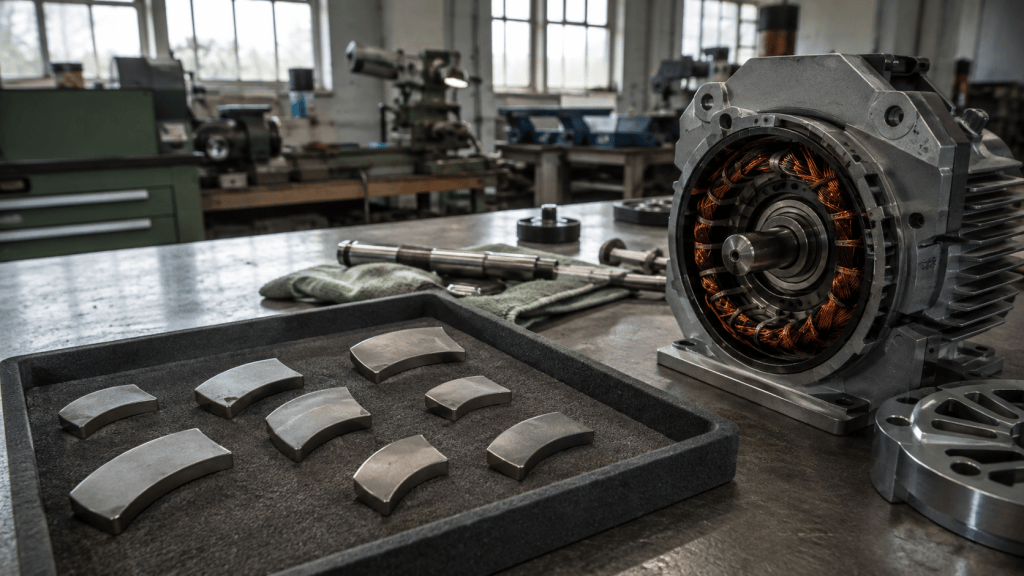
New mines and easier export licences are welcome. Neither tells a manufacturer whether the next batch of magnets will arrive, meet its specifications and keep arriving when relations worsen.
A trade truce can be announced in an afternoon. A manufacturer still has to decide whether it can promise delivery next month.
The immediate backdrop is the U.S.–China Busan truce. Reuters reported on 4 September that U.S. officials were pressing China to honour commitments on rare-earth export licences made in Busan and Beijing over the past year.
Yet some Chinese suppliers were declining U.S. shipments because they feared repercussions from Beijing, the same report found. Its sources described concern that materials could reach banned users. This was not evidence of a blanket export ban. It showed why a buyer might still struggle to secure supplies after a diplomatic agreement.
China’s position is unlikely to be undone by an export agreement alone. The question is whether manufacturers are gaining credible alternatives: components they can use and reorder without depending on another political accommodation.
The advantage is further down the production line
Rare earths are often discussed as though the contest were mainly over deposits in the ground. The harder problem is converting material into something a customer can use.
The International Energy Agency’s 2026 report on rare-earth elements puts numbers on that distinction. In 2024, China accounted for 60% of mined production of magnet rare earths, 91% of refined output and 94% of sintered permanent-magnet production. Those are historical shares for specified stages of the supply chain—not a claim that China controls 94% of every rare-earth product today.
A larger mining industry outside China helps. But ore cannot simply be substituted for a finished magnet. Material must pass through separation and refining, conversion into metals and alloys, and component manufacturing. The IEA identifies magnet production and metallisation—the step that converts refined oxides into metallic material—as particularly difficult gaps in diversification.
This is an industrial advantage, not merely a geological one. Established producers have customers, skilled workers, specialised equipment and surrounding businesses that make production easier to sustain. A new entrant has to assemble enough of that system to become useful to a buyer.
The truce did not remove all export controls. China’s November 2025 suspension covered specified measures until 10 November 2026. The IEA distinguishes the April 2025 restrictions from the wider October package that was subsequently suspended. Buyers still need to know which rules apply to their materials.
First, does permission turn into delivery?
An approved licence is valuable. Without it, a controlled shipment may not move at all. But the licence is an intermediate result, not proof that the buyer has received the right material.
Reuters’ September report describes why that last stretch can remain uncertain. Its sources said suppliers were worried about being connected to prohibited customers. Where the consequences of a mistaken sale appear greater than the value of an order, a company can become more cautious than a purchaser expects from reading the rules.
That does not mean every delay is an instruction from Beijing. Reuters could not establish how many suppliers had refused shipments. It also reported recent licence approvals after long waits; China’s foreign ministry said it was committed to maintaining global critical-mineral supply chains.
The first test is therefore delivery performance. Are repeat orders arriving on the promised dates? Are different buyers receiving the specific materials they requested? Do those improvements last beyond a short release of delayed shipments?
Customs statistics can help show direction. They cannot, on their own, establish that a particular motor maker has received its required grade of magnet. The distinction is especially important when an aggregate recovery conceals weaker deliveries of a small but essential input.
If repeat orders reach affected buyers reliably, licensing uncertainty will matter less to their production plans.
Second, can another supplier meet the customer’s requirements?
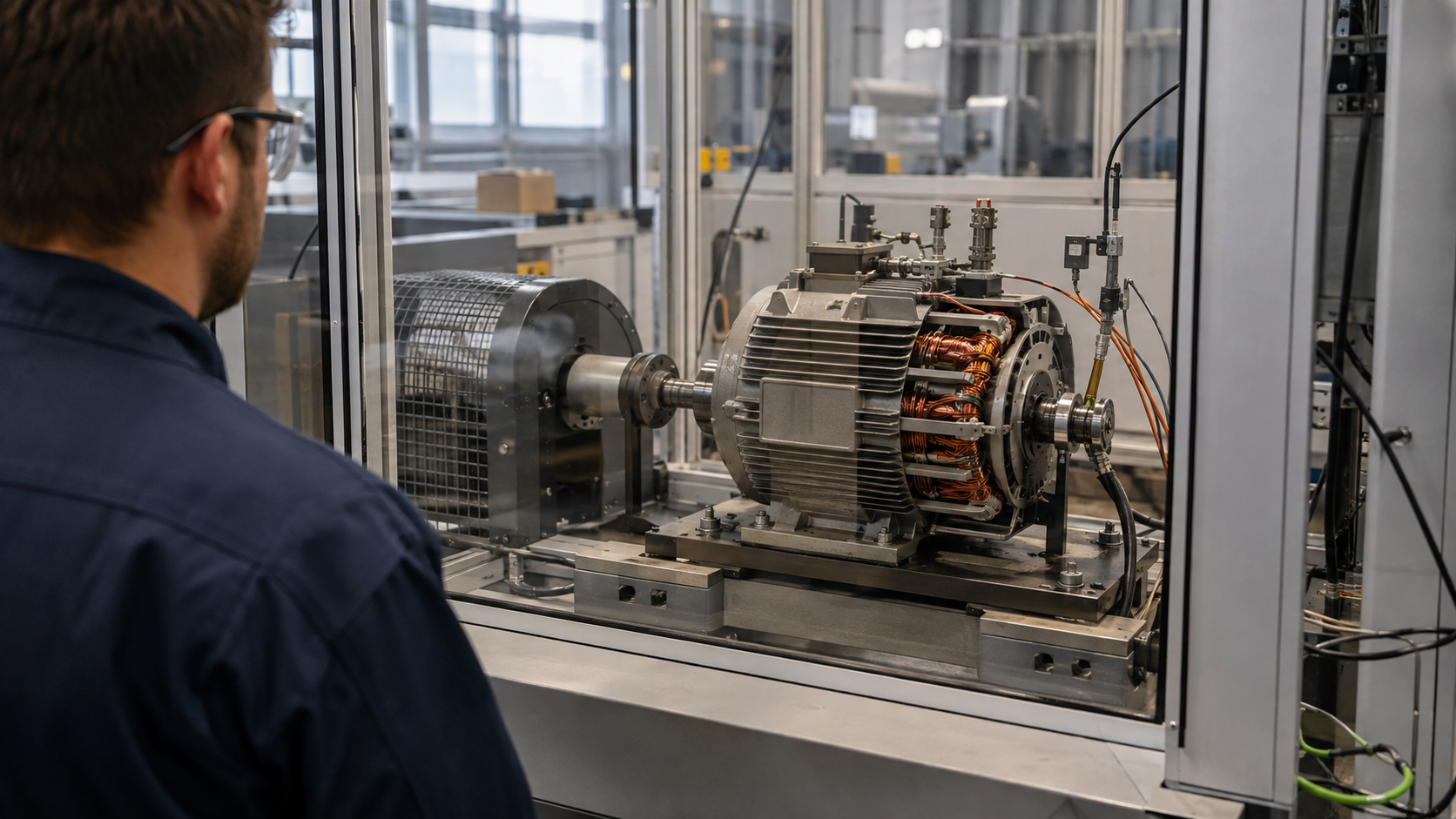
Alternative production is already emerging.
The IEA’s Global Critical Minerals Outlook 2026 records a modest decline in rare-earth refining concentration in 2025, helped by new American projects and higher production in Malaysia. That is a real change in output, not just another funding announcement.
MP Materials offers a useful example. Its 6 August results reported additional magnet deliveries for customer qualification—the checks a buyer makes before accepting a component for use—and regulatory testing. On the earnings call, management said magnets had reached General Motors for in-vehicle testing, with commercial shipments expected in the fourth quarter.
These were test deliveries, according to MP, not yet a record of sustained commercial supply. The fourth-quarter target was management’s expectation, not a completed milestone.
The IEA describes the financing difficulty behind that step: developers need substantial capital before revenues are certain, while customers want technical feasibility demonstrated before signing long-term purchase commitments. Both sides have understandable reasons to wait. Their caution can slow a project that makes strategic sense on paper.
The second test is customer acceptance followed by repeat commercial deliveries. Useful evidence would include a buyer confirming that components meet its requirements, followed by production and shipment records showing more than samples or an initial batch.
An unfinished plant’s advertised maximum output says little about what a buyer can use today. A sustained series of accepted deliveries would show a meaningful reduction in dependence on China, even if the underlying specifications and contracts remain confidential.
Third, does the alternative survive when the emergency fades?

There is another risk after the machinery works: the customer goes back to the cheaper incumbent.
The IEA finds that projects outside the dominant supplier face cost disadvantages, including smaller scale and higher input costs. It also records a premium for magnets produced outside China after export volumes recovered from the 2025 disruption. Security of supply has a price, even when the underlying material is a small part of a finished product’s value.
This creates a difficult bargain. Governments want spare options before the next crisis. Manufacturers face pressure to reduce costs now. Investors need confidence that a politically important plant will still have orders once the immediate shortage eases.
Public support can help, though construction still takes time. Associated Press reported from a small New Hampshire refinery in August that Phoenix Tailings had government backing for expansion, yet its new factory would take up to a year and a half to build.
The third test is whether the supplier can stay in business. Watch for long-term purchase agreements, regular production and repeated deliveries through both tense and quieter periods. A subsidised factory can still supply customers reliably and reduce dependence on China. Security of supply and cost competitiveness are different goals.
The practical question is who pays the premium, and for how long. If customers or governments are willing to cover it, an alternative need not match Chinese prices to be useful. If that support disappears and orders dry up, the buyer’s fallback may disappear too.
Where the pessimistic story goes too far
China’s advantage is large. It need not be permanent.
The IEA identifies several ways to reduce exposure: using less of the most constrained elements, changing designs, substituting materials where performance allows, and recovering magnets through recycling. None offers a universal replacement overnight. Together with new production, however, they can reduce the amount of supply that needs to pass through the most vulnerable routes.
The available evidence supports saying that concentration and licensing uncertainty still leave important customers exposed. It does not establish that every shipment is blocked, that all manufacturers face the same shortage, or that new capacity outside China is failing.
One major unknown is how much supply particular buyers can already replace at acceptable cost. Public announcements, aggregate trade figures and company updates cannot fully answer that customer-level question. That limits how confidently anyone should predict an industry-wide stoppage—or declare the problem solved.
What the next few months could look like
The likeliest near-term path is uneven improvement. With moderate confidence, easier access and new capacity should help some buyers over the coming months while others remain exposed to specific materials, qualification delays or cautious suppliers. Both governments have reasons to avoid the economic damage of a broad interruption, but that incentive does not eliminate restrictions or company-level risk. Broad, sustained recovery across the affected products would point to a faster easing than this outlook assumes.
A more stable outcome would combine easier trade with credible alternatives. Predictable licensing could buy time for customer-qualified production, while purchase commitments keep new plants viable. Evidence would be repeat deliveries from multiple suppliers and buyers reporting fewer emergency workarounds. If those alternatives lose customers once Chinese supply becomes easier to obtain, the apparent stabilisation would be less durable than it looks.
A renewed political confrontation could expose the remaining gaps quickly. Tighter licensing or greater supplier caution could interrupt deliveries before replacement capacity is ready. Watch actual product flows and manufacturers’ production disclosures, not threats alone. Reliable deliveries despite worsening relations would show that, at least for those buyers, political tension had not become an immediate shortage.
These are conditional paths, not predictions that the November suspension deadline will automatically produce another shock. The terms could change again. The deadline matters because businesses must make decisions before they know that outcome.
The order after the first order
A useful alternative does not have to recreate every Chinese factory or eliminate all trade with China. It has to give a buyer a credible way to keep producing when one route becomes unreliable. That may involve allied suppliers, different designs, recycling or a combination of them.
The clearest sign of progress would be customers repeatedly receiving components they can use, through supply chains that hold up under pressure.
Until that becomes routine, a trade truce can provide welcome breathing room. A manufacturer still has to ask about the next order.
Sources and further reading
- Reuters, 4 September 2026: Chinese suppliers declining some U.S. rare-earth shipments. Reporting by three sources, reproduced by MINING.COM; supplier concerns do not establish a blanket ban.
- International Energy Agency, 2026: Rare Earth Elements — executive summary. Supply-chain stages, historical 2024 shares, investment obstacles, recycling and substitution.
- China’s Ministry of Commerce and General Administration of Customs, 7 November 2025: Announcement No. 70 suspending specified measures until 10 November 2026. The original Chinese text specifies which announcements are suspended.
- International Energy Agency, 2026: Global Critical Minerals Outlook — executive summary. Includes the observed decline in rare-earth refining concentration in 2025.
- MP Materials, 6 August 2026: Second-quarter results and magnet-qualification update. The producer’s account of test deliveries and operational progress.
- MP Materials, 6 August 2026 call: Second-quarter earnings discussion, transcribed by The Motley Fool. Management reported GM test deliveries and expected fourth-quarter commercial shipments; expectations are not completed deliveries.
- Associated Press, 3 August 2026: A U.S. refinery’s expansion and the challenge of reducing mineral dependence. On-site reporting from Phoenix Tailings in New Hampshire.
- Gracelin Baskaran and Meredith Schwartz, CSIS: Rare Earth Export Restrictions One Year Later. Specialist analysis of export flows and policy execution, written from a U.S. security-policy perspective.
 Measured Affairs